Tuesday, January 9, 2018

VR in Education Podcast

After thinking about New Years goals and passion projects.  I have decided to start a podcast.  Although there is a host of things I am interested in and passionate about, I decided to pick something new, "future ready", and innovative.  So, I have launched a podcast about virtual reality in education.

You can listen to my first episode and future episodes from the link below.  Let me know what you think.

https://cfrehlich.podbean.com/

Monday, October 16, 2017

Using Virtual Reality in S.T.E.M. Classes

One of my favorite projects as a science teacher is having students use the design cycle to plan and create a Rube Goldberg machine.  This hands-on learning activity helps students build conceptual knowledge regarding systems as well as content knowledge related to simple machines.  Additionally, the process of building a Rube Goldberg machine helps improve student resilience and fortitude through trial and error. 


The few weeks that we work through this project in science is a bit chaotic because there are pieces of everything everywhere.  However, with a new Virtual Reality program called Modbox, students could create their Rube Goldberg machines with no mess at all.  You can learn more about how this program works below.


In Modbox students can easily set up all sorts of artifacts (tubes, balls, dominoes, rockets, etc), controls (switches, buttons), and adjust the gravity.  The possibilities are endless and NO MESS!

Modbox is also useful to conduct science experiments especially ones related to physics.  Give it try and let me know what you think. 

Sunday, May 28, 2017

Fostering Creativity and Innovation Through Virtual Reality in Design


One of the promises of many stellar schools is an emphasis on developing the Whole-Child for a life of purpose. In our design department, we want students to be more creative and innovative in their thinking.  Good designers are dreamers who are courageous and willing to take risks to make products and solutions that are different.  Building this type of culture and ethos is never easy.  Yet, with the right tools, students in design can grow more comfortable making mistakes and learning how to build on them to keep the project moving forward toward excellence.
One such tool that fosters a sense of resilience, fortitude, and supports a culture of courageous creativity is Virtual Reality.  VR devices like the HTC Vive are incredibly immersive, realistic, and engaging.  When students don a headset, they feel like they are in the real-world.  One of the benefits of VR is that the user can interact with the virtual environment. The scope of these environments is as deep as your imagination.  Students can paint, sculpt, build and design in a surreal context.  Student models can be changed and adapted based on iteration and feedback from others.  This new stage or step in the design process gives students more freedom to make mistakes, learn, grow, and be bold and brave as they are creating solutions to complex design challenges.  For example, students in Grade 9 re-designed passenger train cars to hold more people and combat overcrowding.  Before they built their wooden prototype, students used VR to conceptualize their models and revise.  Many noticed small mistakes in measuring and aesthetic features like the shape and location of their seats.  This important step in the process minimizes fear of making mistakes along the way before printing.

Because of it’s fully immersive nature, VR has enormous potential in education. Virtual Reality is currently used in construction, architecture, house sales, film, health care, marketing, and fashion. Here are some of my favorite VR applications that I use often in my design classes with the HTC Vive:


1. Fantastic Contraption-this is a building game, whereby students must design a cart to transport a Jelly-Ball to a certain location.


2. Bounce-this is a problem solving game whereby students use pipes and planks to get a ball from one location to another in various rooms.


3. MakeVR-this allows users to design, adapt and make objects and then send them off to be 3-d printed.
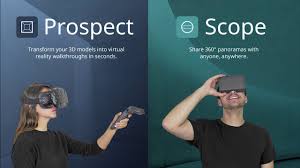


4. Prospect- this program allows students to example their CAD files and make changes and adjustments.


5. Keep talking and Nobody Explodes-this is an amazing team building and communication game. One student (wearing the headset)sees a bomb in a room and everyone outside the room has a bomb manual and must provide information to the person that sees the bomb to help cut wires and solve clues on the bomb to diffuse it.


What are your thoughts on the use of virtual reality in education?

Tuesday, January 3, 2017

From Making to Designing: Moving Beyond Following a Recipe to Big Ideas

As a teenager growing up, I have many fond memories of Shop Class.  In fact, I still have a few of the items I made during my formative high school years.   We learnt many valuable hands-on skills related to woodworking, welding and photography.  Each project or assignment allowed us to follow a set of
instructions in order to build something that looked just like an example provided by our teacher.  Students who excelled were careful and meticulous at following directions. 


Fast forward almost 20 years, and you would have a difficult time finding Shop Class in many high schools across North America.  Many influential thinkers in education, like Sir Ken Robinson, argue that we should be resurrecting vocational education, especially Shop Classes.  Mr. Robinson argues that because of the pressures on governments to focus more on academic excellence many schools have eliminated vocational skills and training.  Alas, these programs, argues Robinson, promote creativity and help schools offer a balanced education that students need. 

Whilst I agree with Sir Ken Robinson, I would push this notion one step further.  The issue with some vocational curriculums is that they fail to challenge and engage students in authentic problem solving.  My Shop Class experience was riddled with recipe following leaving little room for creativity,
inquiry and critical investigation.  We were given a set of instructions to follow in order to carefully build a predetermined product.  At the end of the unit, every student made the same item (some looked more aesthetically pleasing than others :)  We were asked to be makers and not designers.  In my humble opinion, there is a difference.  Please see this chart which outlines my beliefs on the difference between makers and designers.


So, how do we move from Shop Class to Design Class? 

As a International Baccalaureate Middle Years Program Design Teacher, I have learnt the importance of moving assignments or projects from conceptual understanding to conceptual understanding or from making to designing.  Instead of having students make the same thing, whether that is the same box or the same cup, we move to more open-ended products.  One way to ensure this is to use the acronym G.R.A.S.P.S, which stands for Goal, Role, Audience, Situation, Product, and Standards.


For example, let's say you have a 3-d printer in your classroom and you want to use it as a tool to help students engage in learning.  A traditional Shop Class might teach all the students how to use a 3-d modelling program like Tinkercad.  Then, you might have all students create a product like a bag tag.  If we wanted to move students beyond making, the project might look more like this:
 
Products for All Design Challenge
 
Background
Your design company has been hired to develop a small prototype of a product for a child with a specific disability.  You will need to do some preliminary thought on who your target audience will be?  In other words, what disability are you making a product for?  Here are some examples, a) missing or amputated arm/hand/or legs, b) cerebral Palsy, c) Multiple Sclerosis, d) Severe Arthritis, e) Parkinson’s Disease, f) Muscular dystrophy, g) Blindness, h) Deafness
 
Goal-By understanding the perspective of others we can design toys that enable children to fully participation in their community.

Role-You are a product designer who has been hired by the Matel company to design a product or device that makes life easier for someone with a specific physical disability.

Audience-Your target audience will be someone with your chosen physical disability? In other words, what disability are you making a product for? Here are some examples, a) missing or amputated arm/hand/or legs, b) cerebral Palsy, c) Multiple Sclerosis, d) Severe Arthritis, e) Parkinson’s Disease, f) Muscular dystrophy, g) Blindness, h) Deaf Person, i) other?

Situation- Products for people with physical disabilities are often and after-thought. These people are not given the same opportunities are the rest of the able bodied world. Stores often sell products only for the regular population. It is time to consider designing things for people with physical disabilities. 

Product- To research and design a prototype of a product that is 3-d printed for a child that has a physical disability.

Standards- See MYP rubrics for Criterion A, B, C, and D.

Here are other examples of projects or assignments that emphasizes conceptual understanding and help move students from making to designing:

1) The Indian Train project.
2) Hacking Ikea Project
3) Reflecting on Automation

As I stare affectionately at my wooden key chain holder I made in my high school Shop Class, I want to be crystal clear about the message of this blog.  This is not about supremacy of one program over the other.  There is nothing wrong with making, maker spaces and the maker movement.  Children deserve the opportunity to work with their hands and develop skills necessary to build products.  Additionally, children deserve to be cognitively pushed and move beyond making something from a set of instructions.  My interpretation of designing allows them to engage in a problem, think critically and connect to bigger ideas. 

Bibliography
 
Brown, Tara Tiger. "The Death Of Shop Class And America's Skilled Workforce." Forbes. Forbes Magazine, 19 June 2012. Web. 03 Jan. 2017.
 
Robinson, Ken, Sir. "Why Schools Need to Bring Back Shop Class." Time. Time, 08 May 2015. Web. 03 Jan. 2017

Tuesday, December 15, 2015

Open-Ended Robotics Projects


Open-Ended Robotics Projects

Using robotics as a tool to solve problems and learn by trial and error is a lofty goal. However, well crafted design projects should allow students to accomplish these goals in addition to fostering  creativity and innovative.  If we are to allow students to do this, then we will need to establish projects that relate to real world problems.  

One such example of this is the Grade 9 UN Robotics project.  In this scenario, students will create a working robot that must demonstrate a service or prepare a product that would be considered helping humans as it pertains to one of the United Nations Millennium Development goals.  The United Nations has established 17 development goals which can be found here, http://www.un.org/sustainabledevelopment/# 

The student task is to think of a challenge that your robot might complete related to one of the 17 millennium development goals, some example might be:

a. Peace Keeping (example of a Challenge-retrieve and defuse a bomb)
b. Food Aid (example of a Challenge: deliver a food package across a area littered with landmines and hostile territory)
c. Environmental Aid- (example of a challenge-build a robot that can recognize and clean up recyclable materials in a developing country)

This video provides some examples of student designed robots related to the UN Robotic project.


Wednesday, December 2, 2015

Reflecting on My Trip To Robot Academy


What I learnt from my Trip to Carnegie Mellow Robotics Institute

The National Robotics Institute of Engineering and robotics centre is a Branch of Carnegie Mellon University and is located in Pittsburgh.  It is a world leader in robotics education, research and product development.  Since its inception in 1979 it has been ranked in the top 5 in the world for robotics research and product development.  They build robotics products for NASA,  like the Mars Rover,and the US military, like the Dragon Runner, which is an autonomous military robot that can be thrown into a building to provide surveillance.   the As a self-proclaimed geek who religiously reads magazines like Wired, Engadget and Popular Science it has been my dream to visit this mecca of all things “cool” for a long time now.  And my trip did not disappoint…..but not for the reasons I had first hoped for.

When we sign up for Professional development sessions whether it is a 1 hour talk or a week long workshop like mine, we often have preconceived hopes and expectations of what we want to learn.  However, within the first few hours and days of my journey to Pittsburgh it became clear that mine trip to Carnegie Mellon was not really about robots. 

When I arrived at the Calgary Airport at 6am Sunday Morning a huge storm had engulfed Calgary and surround area causing the airport to be shut down.  Sadly, flights were delayed and even cancelled, including my flight to Pittsburgh.  My first German instinct was to line up like hundreds of other stranded passengers and demand to be put on the next flight out.  However, after a soothing latte I thought better and headed back home leaving the chaos behind to collect my thoughts and figure out what would be my next move.  When I got home, much to the surprise of my family, I had received an email from Air Canada saying they had put me on another flight at midnight.  After great patience and some resiliency traveling through the night, I arrived at Carnegie Mellon Institute only a few hours late for my first session. 

Little did I know that my experience at the airport was foreshadowing for what I was to encounter in my workshop.  Because I entered the session late, teachers were already working on programing their robot for their first of many challenges.   The workshop was very hands-on and it allowed us to use the robots to complete increasingly complex tasks.  But, upon reflecting on what I was doing it became clear to me that  what I was really learning when working on my own and with teams was how to problem solve.  Coding and programing robots to complete complex functions consists of trial and error, fortitude and patience.  Learning the code and building the robots was stress-free when working with colleagues.   Getting the robot to actually execute each of the challenges was sometimes frustrating and time-consuming.   This is exactly what happens to my students in design class.  As you can see from this short video, nothing ever works the first time, when programming. 
 
Although my job is to teach them coding my bigger job is to teach them ATL skills like resilience and perseverance.  


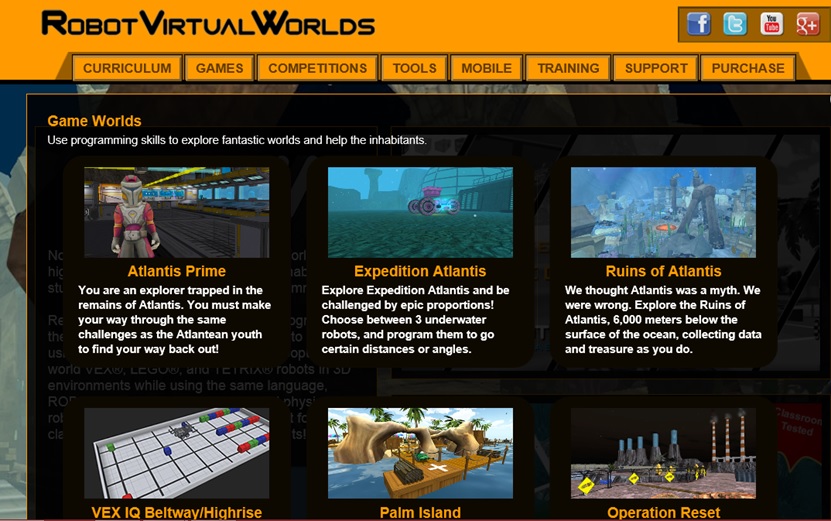
One tool to help students with learning by failure is Robot Virtual Worlds.  This online platform enables students to work through various programming challenges in a simulation type environment.  Some students a willing to take more risks if someone is not watching them.  Robot Virtual world has a variety of different games and challenges which increase in complexity and scope.  Student receive feedback as they move through various levels and stages of the challenge.  My favorite is Beltway High-rise whereby competitors have to travel around the game board the stack blocks to building a high-rise tower using various motors and sensors. 

Although I had intentions of heading to Pittsburgh to learn all I could about Robotics, after spending some time touring around, I also quickly realized that I learnt far more than what I had first imagined.  For example, I learnt that in some places in the world, CHURCHES CAN INCLUDE BEER. 
This is a picture of the famous Church Brew Pub.  I was an old Catholic church that was converted to a brewery.   I don’t know about you but I personally would attend mass more often if this was a staple at my local church.

Like church and beer, it also became clear to me that robotics education is more than learning to program and code.  There are a host of other disciplines that are needed for students to excel at solving problems using robots.  Firstly, when learning to write code, students need to ensure they use something called pseudocode which helps them organize their ideas, commands and functions.  If a there is a problem associated with your programming, finding it can be difficult, unless you are using pseudocode.  Secondly, students need a strong understanding of math principles.   For example, in order to program the robot to travel a specific distance, students can calculate the circumference of the tires and use ratios to solve for any distance. 

In conclusion, I went to Carnegie Mellon to learn more about robots, but came home realizing I learnt so much more.  Robots, like any other technology is another tool that we use to teach 21st century skills like communication and problem solving.  That said, technology is here to stay in our world, it affects everyone and every industry whether it be movies, phones, medicine, or politics.  Frank Levy and Richard Murnane, in their book titled “Dancing with Robots”, make the argument that all schools should be teaching programming as a tool to solve problems as our future will depend on it.


Monday, July 20, 2015

Robotics in the Classroom: A few Tips

After completing a five day professional development session at the prestigious Carnegie Mellon University on robotics, I felt motivated to reflect
on my experiences and thoughts on robotics in Education.

Although there have been many fads and trends in education, I believe that when we find a tool that enables students to engage in meaningful learning, it will not fall victim to a trend.   Robotics is the ideal organizer for engineering education: students learn math, science, technology, problem solving, and communication skills in a context that is interesting, relevant, and fun.

Here are two ideas when developing a vision for your robotics program at your school:

1.  Expose students to a Variety of Experiences that Increase in Difficulty

If you are a strong advocate for robotics education, then you will likely, like me, find a way to incorporate learning into the day to day curriculum.  Although there is merit to offering the after school clubs and competitions, providing robotics as a class will inspire more students.

Assuming this is possible, lets talks about how this experience might progress in your school so that students are getting varied opportunities and are being exposed to a thoughtful scope and sequence. At our school, students are guided through the following levels to allow them to be exposed to a variety of robots and programming:

Grade
Type of Robot
Type of Programming
Useful Links
7
Scribbler S2 Robotics

Gui Graphical Program system
8
Lego Mindstorms EV3 and NXT Robotics
Lego Robots (NXT and the newer EV3) offer a more advanced graphical Software program
Other useful Links
9
VEX IQ Robtics Systems
Robot C Graphical Programming

Whilst this is how we progress our students through robotics at our school, there are several iterations and possibilities.  The important thing to understand is that students should be exposed to a variety of robots and be allowed to progress and advance in their programming and building skills.

2. Invest in Robot Virtual Worlds

Robot virtual Worlds are simulation environments that run virtual LEGO and VEX robots that are programmed in the same languages as physical robots (ROBOTC, NXT-G, LabVIEW, EV3).  

Check out the video on the front page of http://robotvirtualworlds.com/

Why Robot Virtual Worlds?
  1. Many classrooms don’t have enough robots for students.
  2. Very few students have robots at home to do homework or make up missed classwork.
  3. Often robotic teachers are pulled away from the classroom to do field trips and require a substitute teacher who has limited background knowledge in programming robotics. 
The Robot Virtual Worlds Project tackles all of these problems by allowing students to program virtual robots using the same programming software.

Robots are here to stay.  Although I doubt they will ever take over the world as depicted in some movies such as I-Robot and Terminator, I believe the more exposure we provide for students the more likely they are to find useful and powerful ways robots can be used in society like Bay-Max in Big Hero 6. How does your school implement robotics?