I recently recorded a podcast on how we might use immersive VR to instill empathy in the classroom. You can listen to it below,
Thursday, February 8, 2018

Sunday, January 28, 2018
VR Tools for Creation
I recently recorded a podcast discussing VR tools that you might use for promoting creation in the classroom. You can listen to it below.
Sunday, January 21, 2018
Starting a VR Club
I recently, recorded a podcast about what to consider when starting a VR Club at your school. You can listen to the recorder below.
Saturday, January 20, 2018
Start ED Up Podcast
 There are so many ways to grow and learn in today's technology focused society. One way I try and stay current and educated is through listening to podcasts on my runs. A favorite of mine is called StartedUp. Don Wettrick is dynamic, scrappy and often interviews people outside the educational circles to get insights into making schools more innovative. He recently started a Friday focus on teachers episode. To my delight, I was invited as a guest recently to talk with Don about my focus on using VR in the classroom. You can listen to the interview here,
Tuesday, January 9, 2018
VR in Education Podcast
After thinking about New Years goals and passion projects. I have decided to start a podcast. Although there is a host of things I am interested in and passionate about, I decided to pick something new, "future ready", and innovative. So, I have launched a podcast about virtual reality in education.


You can listen to my first episode and future episodes from the link below. Let me know what you think.
https://cfrehlich.podbean.com/
Monday, October 16, 2017
Using Virtual Reality in S.T.E.M. Classes
 One of my favorite projects as a science teacher is having students use the design cycle to plan and create a Rube Goldberg machine. This hands-on learning activity helps students build conceptual knowledge regarding systems as well as content knowledge related to simple machines. Additionally, the process of building a Rube Goldberg machine helps improve student resilience and fortitude through trial and error.
 The few weeks that we work through this project in science is a bit chaotic because there are pieces of everything everywhere. However, with a new Virtual Reality program called Modbox, students could create their Rube Goldberg machines with no mess at all. You can learn more about how this program works below.
In Modbox students can easily set up all sorts of artifacts (tubes, balls, dominoes, rockets, etc), controls (switches, buttons), and adjust the gravity. The possibilities are endless and NO MESS!
Modbox is also useful to conduct science experiments especially ones related to physics. Give it try and let me know what you think.
Sunday, May 28, 2017
Fostering Creativity and Innovation Through Virtual Reality in Design

One such tool that fosters a sense of resilience, fortitude, and supports a culture of courageous creativity is Virtual Reality. VR devices like the HTC Vive are incredibly immersive, realistic, and engaging. When students don a headset, they feel like they are in the real-world. One of the benefits of VR is that the user can interact with the virtual environment. The scope of these environments is as deep as your imagination. Students can paint, sculpt, build and design in a surreal context. Student models can be changed and adapted based on iteration and feedback from others. This new stage or step in the design process gives students more freedom to make mistakes, learn, grow, and be bold and brave as they are creating solutions to complex design challenges. For example, students in Grade 9 re-designed passenger train cars to hold more people and combat overcrowding. Before they built their wooden prototype, students used VR to conceptualize their models and revise. Many noticed small mistakes in measuring and aesthetic features like the shape and location of their seats. This important step in the process minimizes fear of making mistakes along the way before printing.
Because of it’s fully immersive nature, VR has enormous potential in education. Virtual Reality is currently used in construction, architecture, house sales, film, health care, marketing, and fashion. Here are some of my favorite VR applications that I use often in my design classes with the HTC Vive:
 1. Fantastic Contraption-this is a building game, whereby students must design a cart to transport a Jelly-Ball to a certain location.
  2. Bounce-this is a problem solving game whereby students use pipes and planks to get a ball from one location to another in various rooms.
  3. MakeVR-this allows users to design, adapt and make objects and then send them off to be 3-d printed.
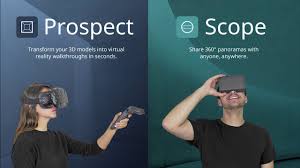 4. Prospect- this program allows students to example their CAD files and make changes and adjustments.
5. Keep talking and Nobody Explodes-this is an amazing team building and communication game. One student (wearing the headset)sees a bomb in a room and everyone outside the room has a bomb manual and must provide information to the person that sees the bomb to help cut wires and solve clues on the bomb to diffuse it.
What are your thoughts on the use of virtual reality in education?
Subscribe to:
Posts (Atom)